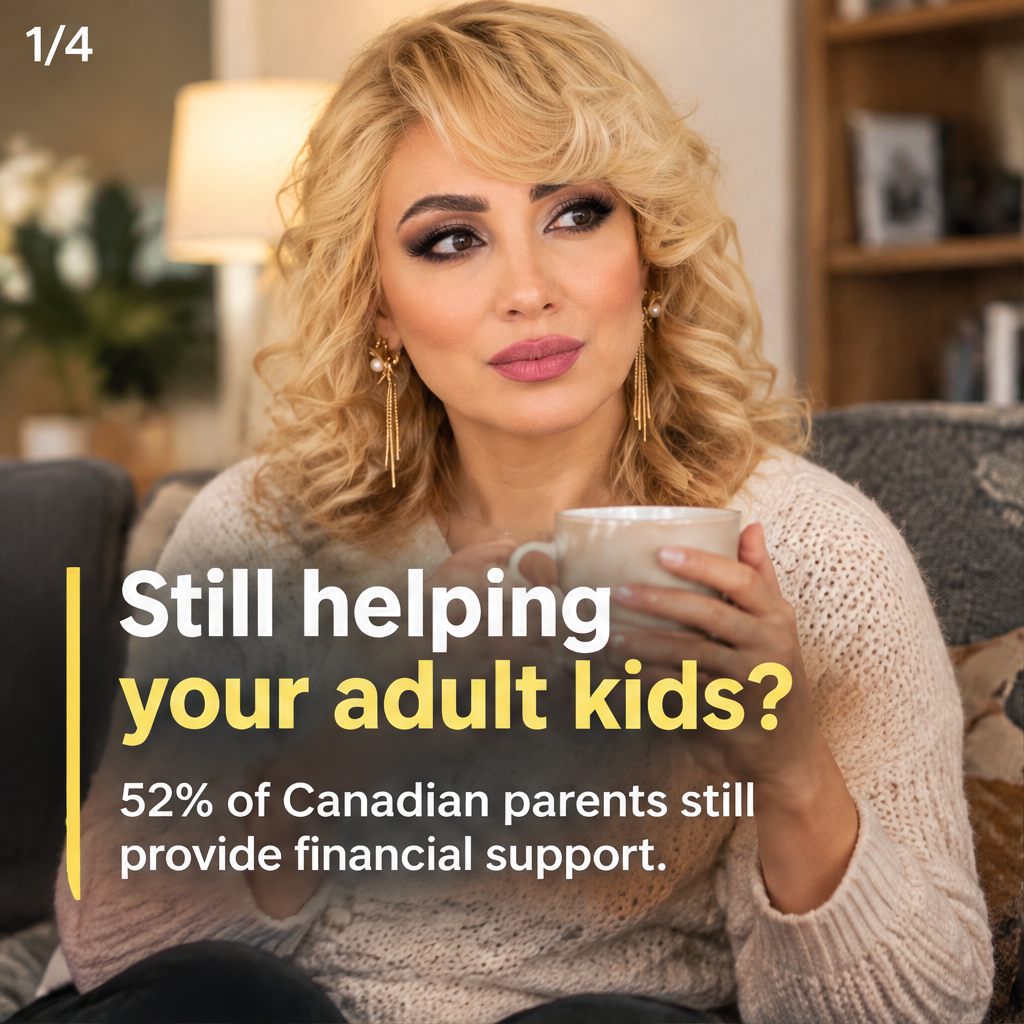
A bank survey found 51% of Canadian parents with children aged 18 to 40 gave financial help in the past year, averaging ~$6.2K.
Support often extended well beyond the early 20s: 21% of parents helped children aged 30 to 34, and 19% supported ages 35 to 40.
Among helping parents, 56% paid groceries, 43% covered emergencies, 24% helped with rent, 21% paid utilities, and 12% helped reduce debt for them.
Parents cited both values and affordability: 51% said helping is what parents do, 35% pointed to living costs, and 25% wanted opportunities.
Guidance for Canada parents: fund essentials, emergency savings, debt and retirement first, then set a clear amount, end date and regular check-ins.
Category: Latest Posts
-
51% of Canadian Parents Still Help Adult Kids
-
51% of Canadian Parents Still Help Adult Kids—Here’s How to Give Without Jeopardizing Your Future
Financial support between Canadian parents and their adult children remains common, with 51% of parents still providing help. Assistance may include contributions toward housing, education, debt payments, childcare, or everyday expenses. While helping family can be meaningful, ongoing support can also affect retirement readiness and create uncertainty for everyone involved.
The first step is to define clear boundaries. Parents should review their budget, emergency savings, debt obligations, and retirement plan before offering money. A fixed amount, time limit, or specific purpose can make support more manageable. It is also important to distinguish between a gift and a loan, then document the arrangement clearly to reduce misunderstandings.
Adult children benefit most when financial help is paired with a path toward independence. Consider supporting essential costs, matching savings, or contributing to a specific goal rather than covering open-ended spending. Honest conversations about income, expenses, repayment, and future expectations can protect both finances and family relationships.
Before making a significant commitment, Canadian families should consider tax implications, estate planning, and the impact on long-term goals. A qualified financial professional can help compare options and build a plan that supports loved ones without sacrificing the parents’ own financial security.
Continue to full article -
Financial Lessons Experts Wish They Knew Younger
One expert regretted buying a luxury sports car in her 20s, saying a mentor might have helped her avoid bad spending and investment choices.
She later realized money beliefs are often inherited, and questioning them can uncover harmful habits, including discomfort with negotiating and pressure to mirror wealth.
For many people, that balance may mean saving ~15% to ~20% of annual income while still making room for present-day experiences too.
She suggested using a financial plan to match money decisions with personal goals, and to test how current habits could shape future outcomes.
A planner said wealth usually builds gradually through consistent saving, regular investing, cost and tax management, avoiding major mistakes, and letting compounding reward patience. -
Toronto Voters Favour Lower Property Tax Increases
In Toronto, 54% of respondents favored keeping the next property tax increase below inflation or avoiding an increase entirely, showing broad support for tighter budgeting.
In the mayoral race, the incumbent signaled future tax increases near inflation, while a challenger pledged a first-yr freeze and openness to below-inflation later.
The same Toronto poll found the incumbent mayor led decided and leaning voters 50% to 39%, while a third candidate held 10% support.
When asked what could justify higher taxes, Toronto residents pointed first to affordable housing and homelessness, followed closely by transit and emergency services.
Transit remained a practical issue: 29% said they use public transit less, and riders most often wanted more reliable service or better safety. -
Happy Thanksgiving
The perfect opportunity to embrace your inner "foodie" and unbutton your pants at the dinner table!In Canada, post-Thanksgiving is all about creative cranberry sauce solutions. Cranberry sauce pancakes, anyone?It's that time when multiple ovens are a blessing. Turkey, pies, casseroles – less stress!
-
Ontario Minimum Wage Rises This Fall
Ontario's general minimum wage will increase on October 1, 2026, moving from $17.60 to $17.95 per hour for workers across the province.
The change was tied to a ~2% increase in Ontario's CPI, linking the new wage floor to recent inflation in the province.
Provincial officials said the higher wage is expected to benefit >700K workers, making this one of Ontario's broadest employment standard updates currently.
Ontario employers and HR teams have been urged to update pay rates, contracts, and job postings before October 1 to stay aligned with rules.
For Ontario workplaces, the coming change means payroll planning now matters, since the updated base wage becomes mandatory provincewide on October 1, 2026. -
Protecting Family Wealth Beyond Estate Taxes
Even when estate taxes aren’t a concern, thoughtful planning is still essential for families who want to protect their wealth and provide for future generations. Over the years, I’ve seen how trusts offer valuable benefits beyond tax savings—helping families avoid probate, shielding assets, and ensuring that children and spouses are safeguarded against unexpected challenges. For example, trusts can limit disputes, protect beneficiaries from certain claims, and create a strong foundation for heirs, even if an estate isn’t taxable.
It’s also important to remember that income tax planning becomes even more significant as rules change. By 2026, complex trusts may face about a 37% ordinary income tax rate after the first $16,000—adding long-term pressures for heirs. While portability can help preserve a deceased spouse’s exemption, strategies like marital trusts and coordinated asset titling still play a key role in protecting both spouses and the family legacy.
The most effective estate plans are flexible, reviewed regularly, and involve the next generation early. As a financial professional focused on wealth protection, I encourage clients to build these plans step by step, so they can adapt as family goals and tax laws evolve. Empowering families with education and the right strategies means greater confidence in every stage of planning for the future.
-
Canada’s Next Rate Move May Be a Hike
A major bank’s economists expected Canada’s central bank to hold steady near term, then begin gradual rate hikes in Early-Q1 2027 instead of cutting.
Early-Q3 GDP was flat after ~0.5% monthly gains through Early-Q2 to Late-Q2, adding downside risk to quarterly growth tracking near 2% pace.
Two forces shaped that view: US tariffs hit Canadian imports as a supply shock, while oil prices and refinery margins kept inflation concerns alive.
Consumer data looked sturdier than the GDP print, with hours worked up, job openings firm through Late-Q3, and retail activity also improving.
For Canada borrowers nearing renewal, that outlook suggested stable rates may not last, making fixed-versus-variable planning more important than waiting for easier borrowing. -
File Taxes to Keep GIS Payments
Canada’s supplement is a monthly, tax-free payment for people 65+ who also qualify for the federal seniors pension, helping support lower-income older adults.
In many cases, the federal service can enroll eligible people automatically and mail notice. If no letter arrives 1 mo after turning 64, apply.
Maximum monthly support reaches $1.1K for single, widowed, divorced, or uncovered partners, and up to $676 when a spouse receives the federal pension or allowance.
Payments may stop or shrink if 2025 taxes are not filed. To avoid interruptions, file soon or report income directly to the federal service.
Related support includes options for spouses and widowed adults ages 60 to 64. People under 70 can keep contributing while receiving retirement benefits. -
💕 Breast Cancer Awareness: Protect What Matters
This Breast Cancer Awareness Month, turn awareness into action with three meaningful steps: check yourself, book your screening, and call a woman you love. Early conversations and regular screening can help support better health decisions, while encouragement from family and friends can make taking action easier. Financial preparation matters too. Critical illness coverage may provide a tax-free lump-sum benefit after a diagnosis of a covered condition, helping you focus on treatment, recovery, and the people who matter most. Coverage, eligibility, exclusions, and definitions vary, so speak with a licensed advisor to understand your options.
Continue to full article