When it comes to building retirement wealth, maximizing your TFSA contribution room and allowing investments to grow and compound tax-free can be a powerful strategy. By focusing on quality businesses with strong fundamentals—rather than chasing riskier companies with heavy debt or volatile earnings—we help safeguard your long-term goals and create more predictable outcomes. For instance, a Canadian insurer recently faced significant severe-weather and fire claims in Q2, yet maintained profitable underwriting and resilient first-half results. Even after its shares declined about 11% to $267, returns on equity remained close to 17%, and its dividend has grown steadily for two decades. For many preparing for retirement, moments like these can present thoughtful entry points, especially if you’re looking for long-term compounding potential. As someone who specializes in wealth protection and retirement planning, I believe that understanding these opportunities—and the discipline to reinvest dividends—can make all the difference in securing your financial future.
Author: Sharon Babaeva
-
Stop Collecting Pieces. Start Building the Full Picture.
A TFSA, non-registered savings, and insurance may all have a place in your financial plan—but owning the right products does not automatically create the right strategy. The real value comes from understanding how each piece supports your family’s goals, manages risk, provides flexibility, and fits into your broader financial picture. A coordinated review can help identify gaps, overlap, and opportunities to make your plan more intentional. Stop collecting pieces and start building a strategy that works together. Message me to book a complimentary 20-minute review.
Continue to full article -
RRSP Dividends Can Compound Into Retirement Wealth
Canadian investors have used self-directed registered retirement plans to build stock portfolios that can generate income alongside public benefits and workplace pensions.
A popular approach was buying Canadian dividend stocks, then reinvesting each distribution into more shares so every future payout had a larger base.
One Canadian pipeline operator outlined a $41B capital program aimed at ~5% annual cash flow growth, alongside steady dividend increases and a ~6% yield.
One Canadian utility outlined a $28.8B capital program expected to expand its rate base by ~7% yearly and support mid-single-digit annual dividend growth.
The broader takeaway favored dividend reinvestment for long-term wealth building, while noting future results were not guaranteed and diversification remained important in retirement portfolios. -
Happy Labour Day!
Labour Day in Canada marks a well-earned break celebrating workers and the unofficial end of summer, when everyone suddenly remembers all the things they meant to do in August.
It’s the last big excuse for barbecues, lake trips, and squeezing in one more summer adventure before routines and school schedules take over again.
Stores and sidewalks feel a little calmer, while patios and parks get their final big rush of summer energy and “just one more weekend” vibes.
Happy Labour Day! Wishing you a relaxed, fun-filled long weekend with good food, no alarms, and maximum enjoyment before fall shows up uninvited. -
Your “Weaknesses” May Be Financial Strengths
Sensitivity, pride, and stubbornness are not automatically weaknesses. In finance, sensitivity can help professionals understand client concerns and build trust. Pride can support high standards, ethical work, and attention to detail. Stubbornness can become persistence—the discipline to keep pursuing long-term goals through uncertainty. The difference lies in management. Taking rejection personally can cloud judgment, refusing feedback can limit growth, and rigid thinking can create avoidable risk. Use these traits intentionally: listen without absorbing every criticism, protect quality without defending your ego, and stay committed while remaining willing to adapt. Strength grows when self-awareness guides action.
Continue to full article -
Canada, Pay Attention! 🇨🇦
Canada, pay attention: property ownership may be more complicated than it appears. If your name is listed on a property but someone else is the beneficial owner, you may have created a bare trust without realizing it. For the 2026 tax year, certain bare trusts may need to file a T3 return by March 31, 2027. Rules and exemptions can depend on the specific facts, so do not assume you are exempt. Ask your accountant to review your situation, and get professional guidance to make sure your estate plan works as intended. Save this post, share it with someone who may need it, and call 647-937-5509.
Continue to full article -
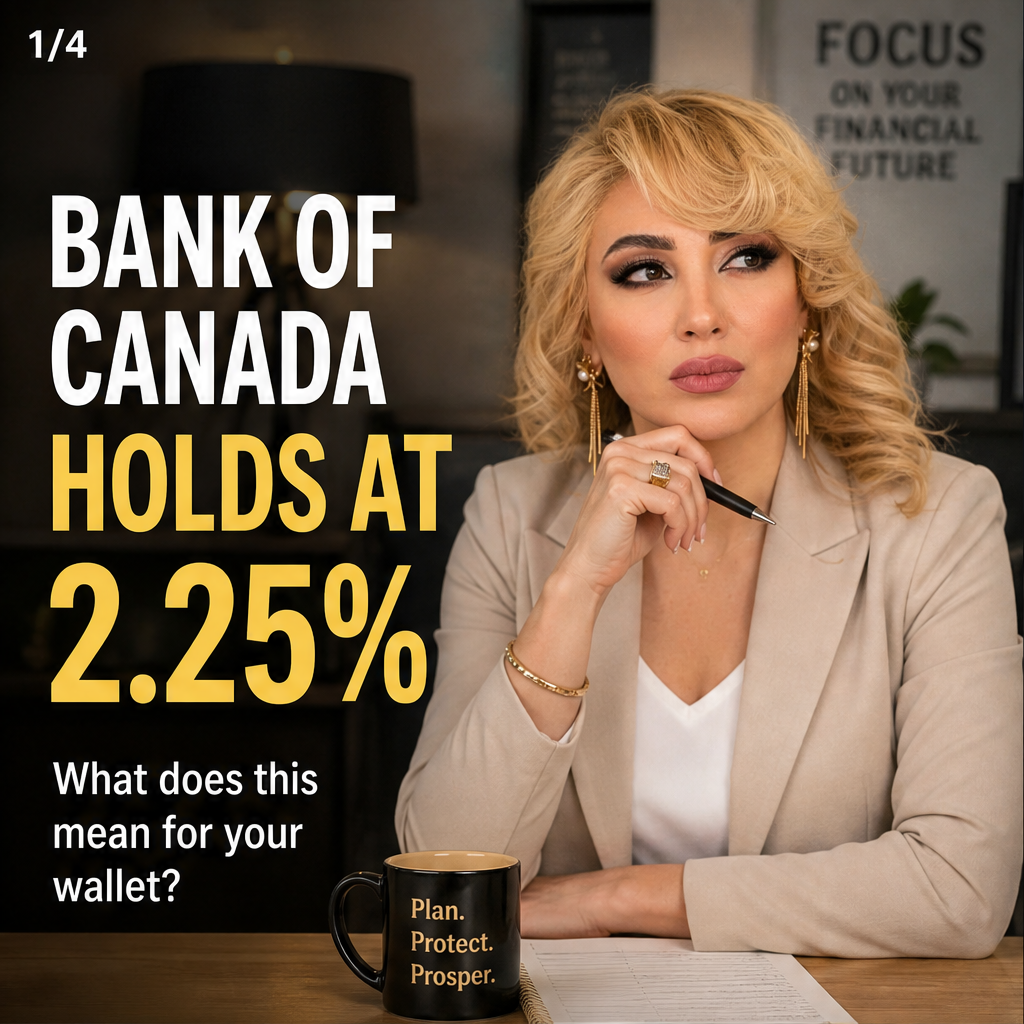
Bank of Canada Holds at 2.25%
The Bank of Canada kept its key policy rate at 2.25% on Wednesday, in line with expectations, while Governor Tiff Macklem signalled that further increases remain possible if inflation does not ease. For Canadians, the decision is a reminder that borrowing costs can change quickly. Households should review monthly cash flow, stress-test mortgage and loan payments, and reconsider non-essential debt. Borrowers may also want to compare fixed and variable-rate options with a qualified adviser. Monitoring inflation data and future Bank of Canada announcements can help Canadians make more informed financial decisions.
Continue to full article -
Weather the Storm, Build Your Future
Life and markets move through changing seasons. Unexpected expenses, shifting plans, and financial uncertainty can feel overwhelming, but preparation and patience can help you stay grounded. Start by building an emergency fund, then maintain consistent saving and investing habits that match your goals and risk comfort. Review your budget, insurance, debt strategy, and long-term plan as circumstances change. You do not need to solve everything at once—one thoughtful step today can create momentum for tomorrow. Your brighter financial days are ahead.
Continue to full article -
Canada’s Degree Costs Can Top $75K
In Canada, post-secondary costs can exceed >$30K yearly once tuition, rent, food, transportation, and books are included, making upfront family planning especially important.
Parents and students benefit from deciding early whether tuition support is a gift or loan, then setting expectations on repayment, interest, and review points.
Many families have saved only ~$20K per child, far below the ~$75K avg. cost of a 4-yr Canadian degree with residence currently.
Education savings accounts can unlock a federal match of ~20%; experts said even small monthly deposits help families start earlier and build confidence.
Contributing $2.5K yearly from birth over 18 yr was presented as enough for a 4-yr program, even with residence and out-of-province costs. -
Global Accidental Death Benefits Explained
Accidental death benefits add a supplemental payout when an insured person dies from a covered accident, enhancing financial protection for named beneficiaries.
They are usually optional riders on basic life policies, purchased for an extra fee and often ending at a specified policy age limit.
Covered accidents may include car crashes, falls, choking, drowning, or machinery incidents, while illness, illegal activity, war, and risky hobbies are often excluded.
Some plans extend into AD&D coverage, paying benefits for severe injuries such as dismemberment, burns, paralysis, or other qualifying accident outcomes too.
People in hazardous jobs, frequent travel, heavy commuting, or dependent-support situations may benefit from reviewing definitions, exclusions, costs, and beneficiary needs carefully.